The Growing Impact of Power Outages on Homeowners
Power outages are becoming more common and lasting longer.
Across the country, families are facing interruptions that disrupt daily life, strain household budgets, and put health and safety at risk. This overview explains what’s driving the increase and what it means for households.
start offering a path to constant power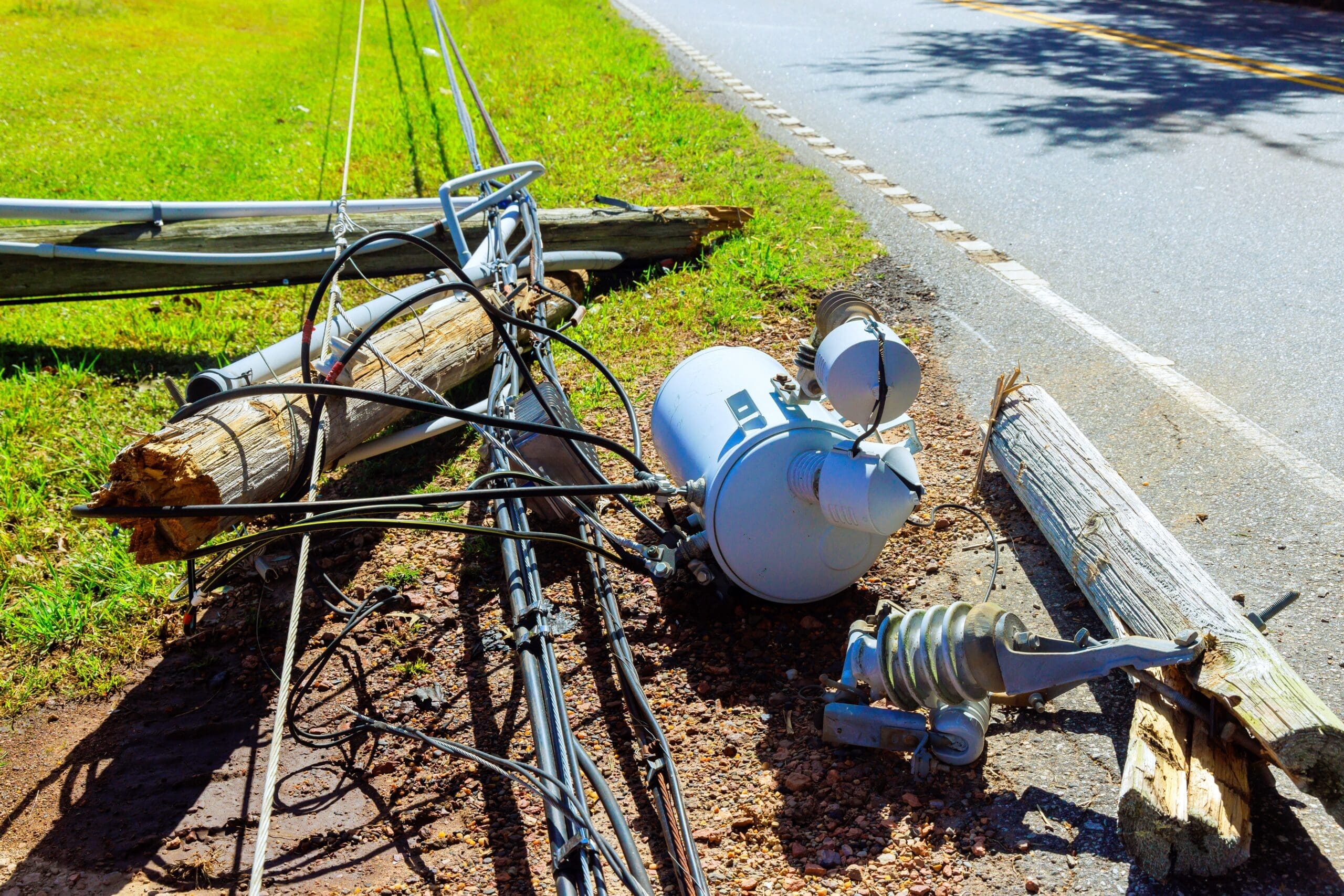
Power Outages Are Increasing
Outages have become more frequent and longer-lasting across the U.S.
Severe storms, extreme temperatures, and grid strain are the main causes.
Some households face days without electricity after major events.
Regional Impact
Who gets hit the hardest?
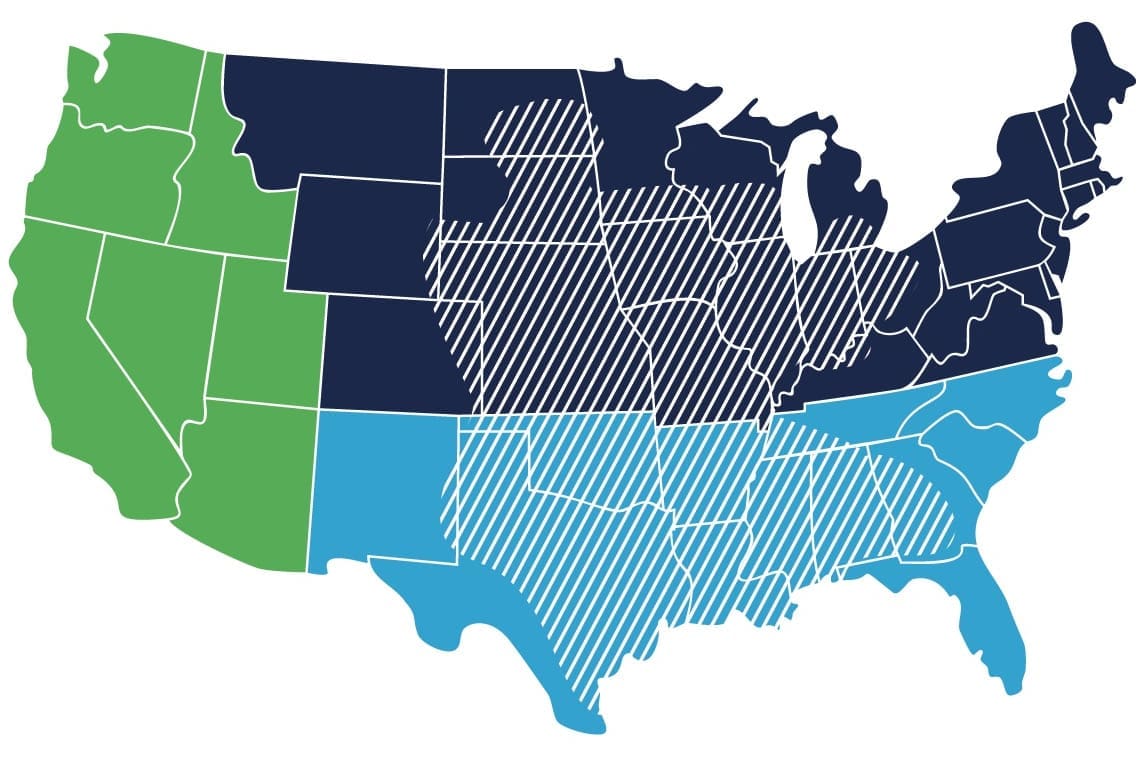
Rural and suburban areas experience more prolonged outages, especially during extreme seasonal weather.
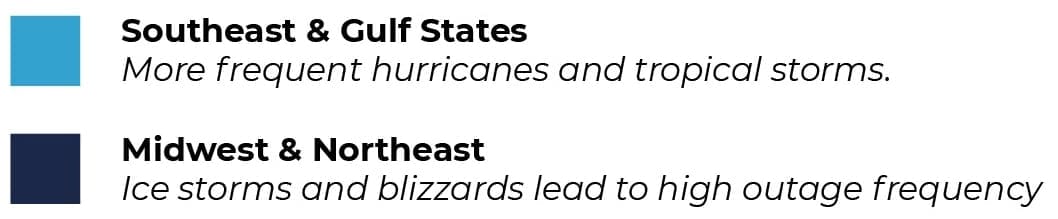
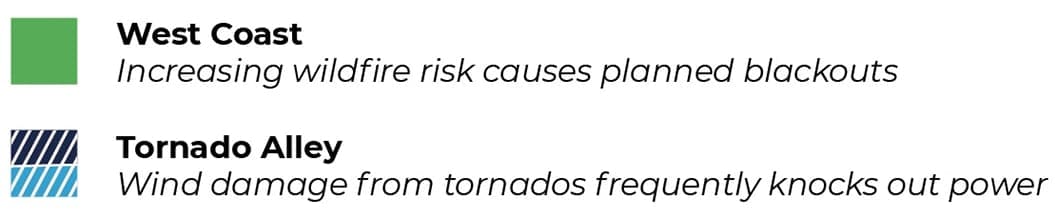
Source: U.S. Department of Energy
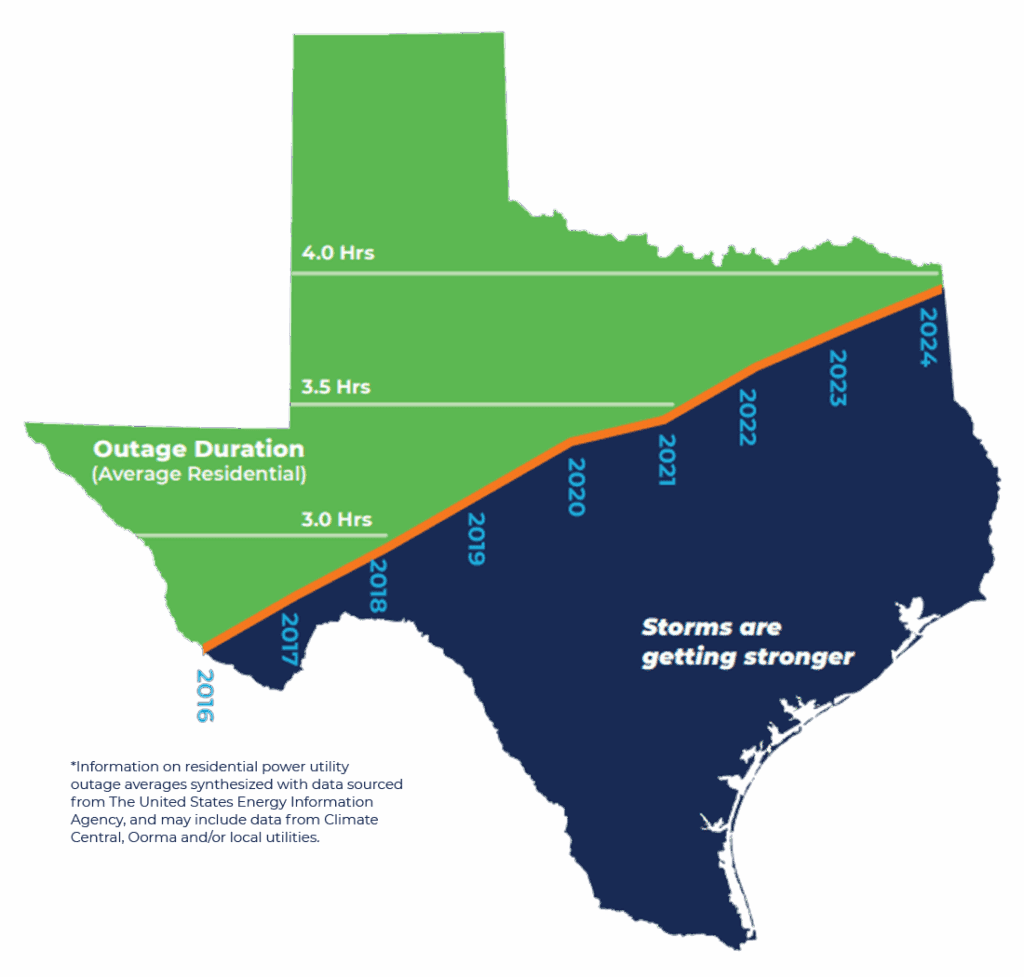
Texas
- During the February 2021 winter storm event in Texas (the 2021 Texas power crisis), the state suffered a total of 228,542,027 customer-hours of outage.
- February 2021 and the winter storm resulted in over 228 million customers hours outage.
- In that same winter storm almost one-quarter of counties suffered for more than 48 hours with 20% of residential customers without power.
- Since 2020 Texas has experienced more than 130 major power outages and power grid incident.
- The Electric Reliability Council of Texas (ERCOT) grid provides 90% of Texans their power, which means that grid outages disproportionately affect more customers and inflict greater power, medical and economic impact.
California
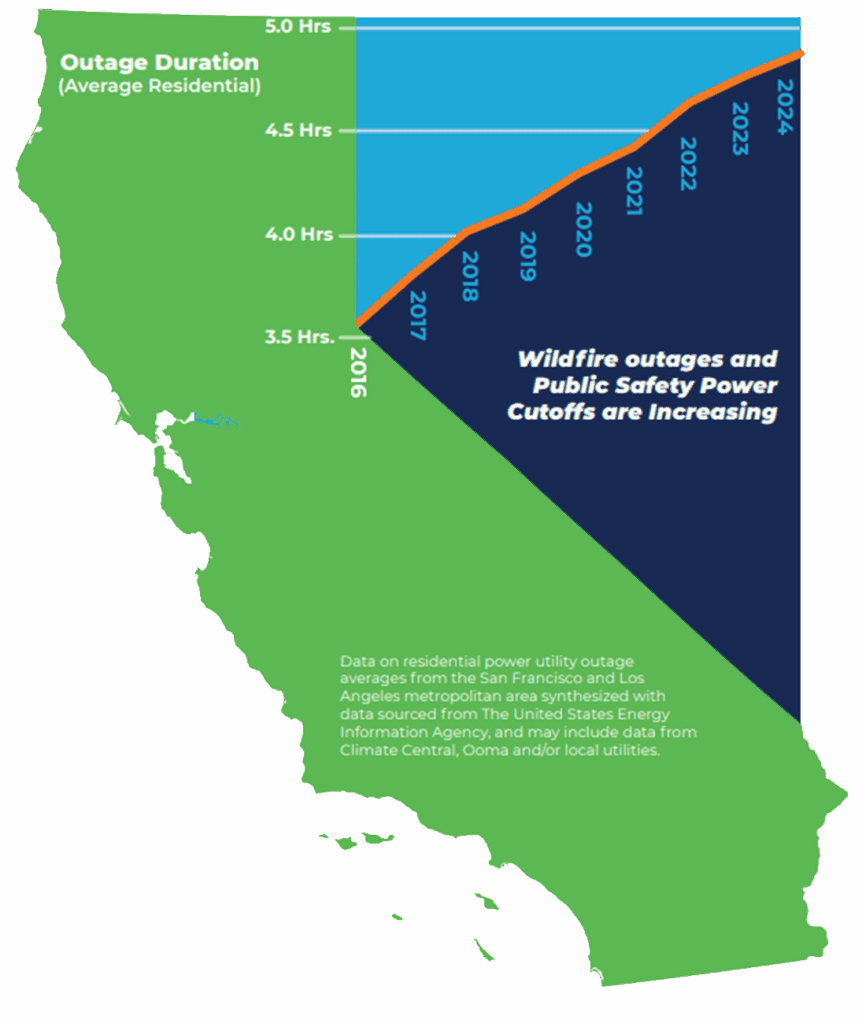
- Between 2000 and 2023, California experienced more than 145 major power outage incidents due to the weather, each one impacting more than 50,000 residential customers and making the state the third highest impacted state in the country.
- Residential power outages are increasing, up from 1.7 hours per year in 2013 to 5.4 hours in 2023.
- California saw 39 major power outages in 2022 alone with over 414 hours of power outage.
- Interruptions are happening more frequently too with a System Average Interruption Duration Index (SAIDI) of 162 minutes or just under two and three-quarters of an hour of interrupted power.
Louisiana
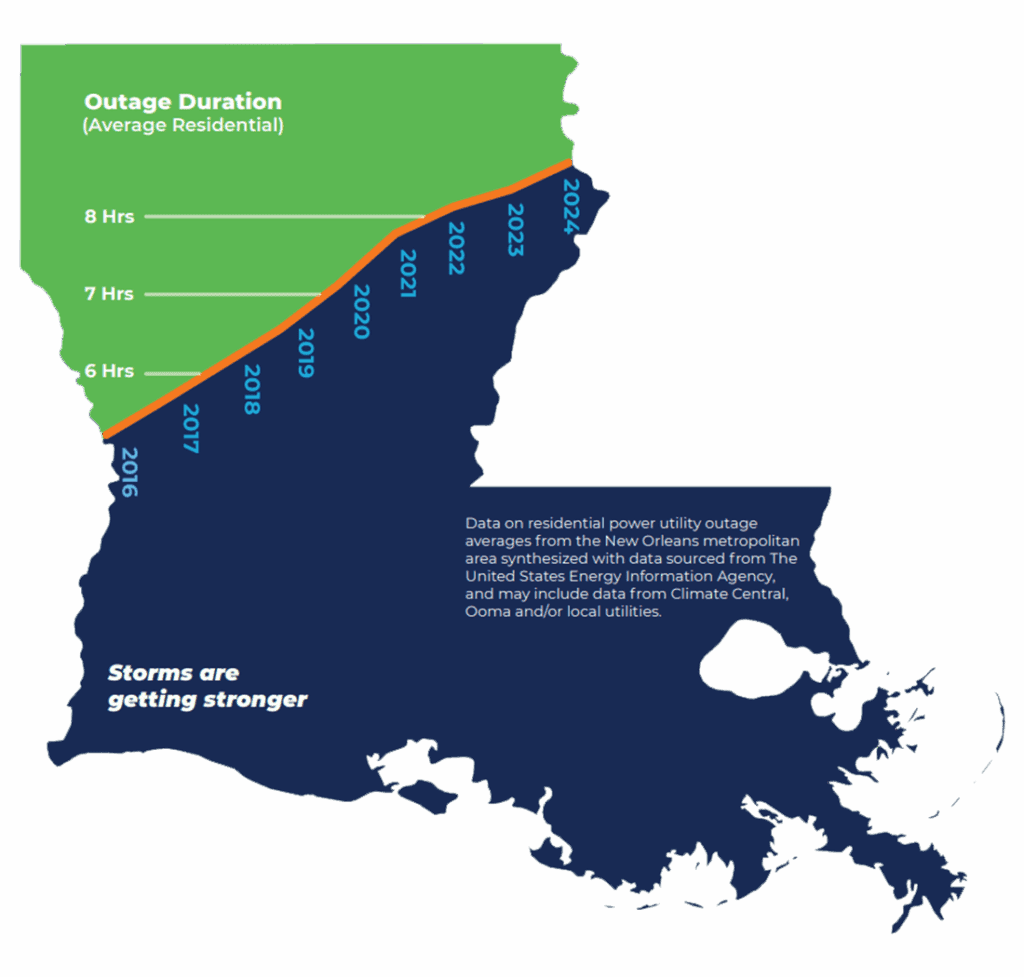
- The average Louisiana customer experiences just over 2 power interruptions annually.
- Louisiana is one of the most exposed states for power outage incidents caused by hurricanes and power line damage.
- Hurricane Francine knocked out power for 340,000 customers.
- On average roughly 5,000 customers experience a power outage each day.
- Louisiana is one of the states receiving federal support to improve power grid resilience.
Maine
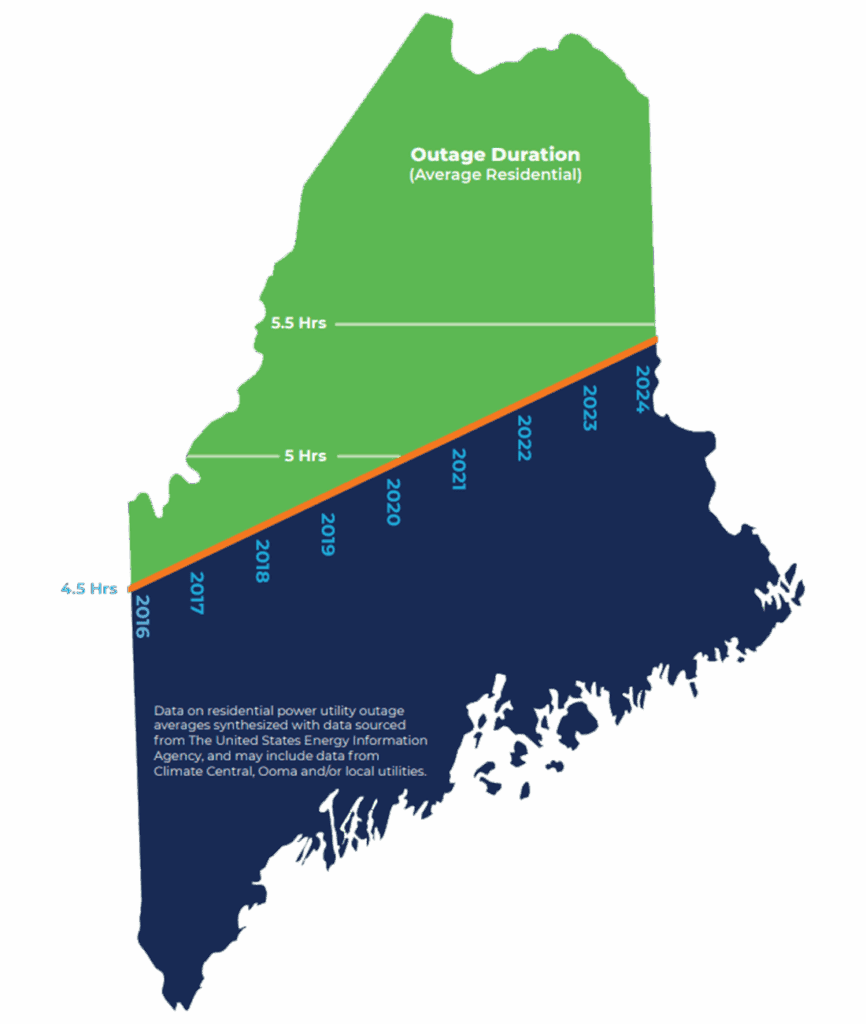
- Maine experiences one of the highest power outage incidents in the United State with approximately 4 outages each year per customer.
- Outage durations are among the longest in the US with an average of 14 hours outage time per incident.
- Extreme weather and storms are the greatest cause of power outages in the state with almost 700 outages lasting more than an hour, but 37 outages lasting more than 8 hours.
- Cold weather risk is very high in Maine, with even an hour outage causing health and medical issues for hundreds of thousands of customers.
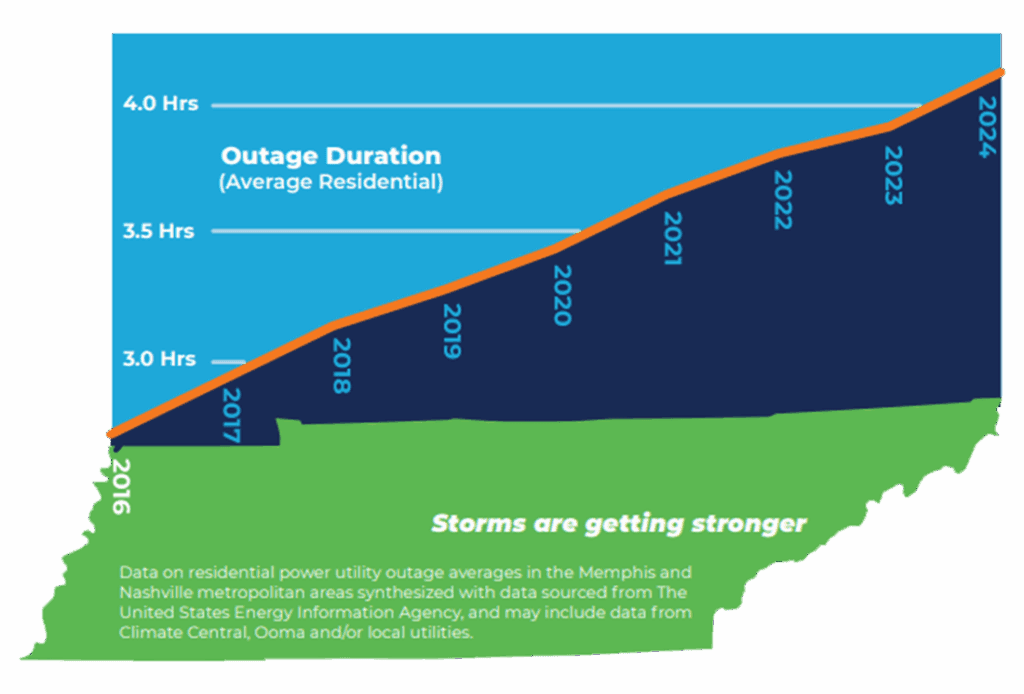
Tennessee
- Tennessee is ranked 46th in the country for average duration of outages and dead least for the average frequency of power disruption incidents.
- Following on from this, the state is 42nd for response time to a grid incident leaving homeowners doubly exposed.
- In a recent outage study covering 72 hours, over 240,000 outages were reported.
- The state is affected especially by severe thunderstorms and tornadoes, for instance over 70,000 customers had power loss in the 2020 tornado outbreak
- A Nashville customer stated, “I have lived here for 7 years and we get 2 to 4 outages a year. Get a generator, You’ll use it.”.
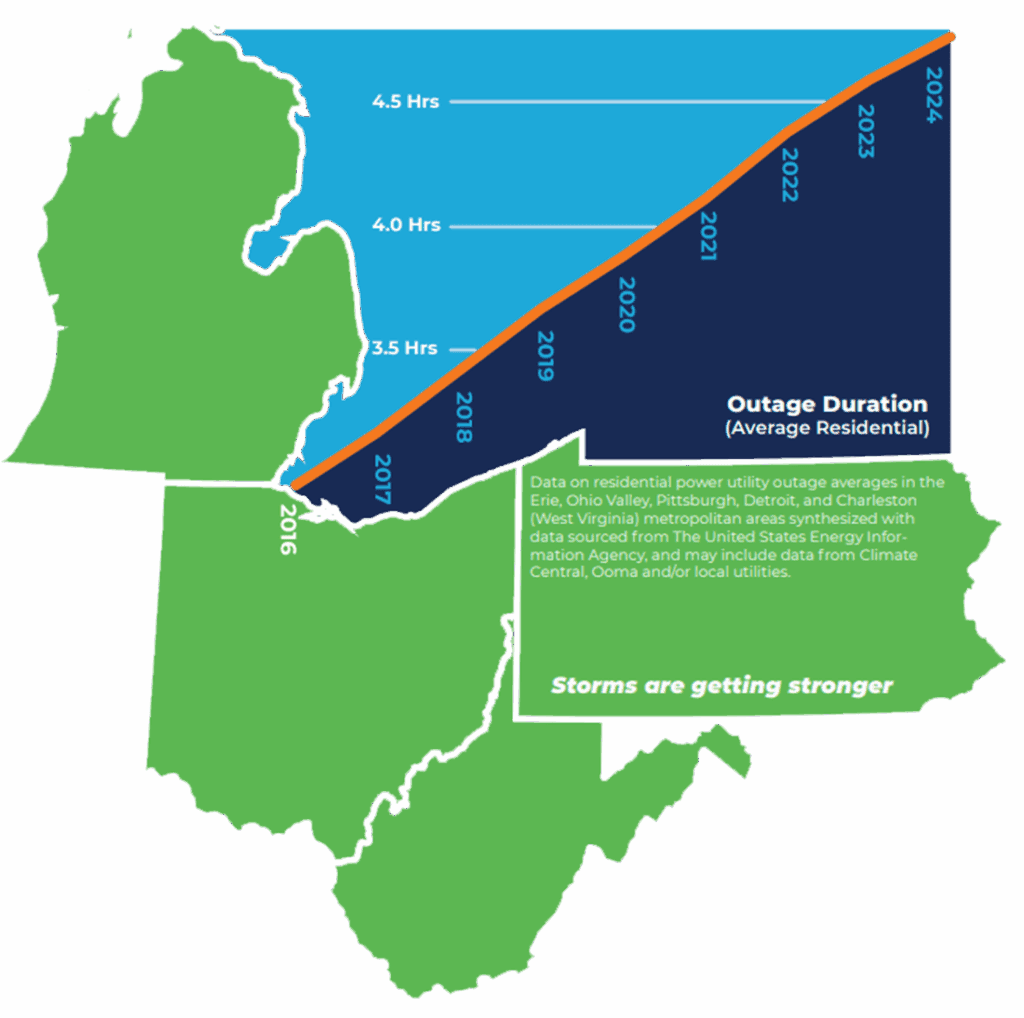
Upper Midwest
- The leading cause of power loss in the Upper Midwest are severe storms and excessive wind events.
- The region enjoys a relatively low level of annual power outages, but this ignores when they tend to happen i.e. in the winter months with severe cold representing a significant danger and threat to life.
- When we look at the winter months, the outages typically last up to 19 hours.
- A backup generator is essential in these circumstances and cold weather conditions.
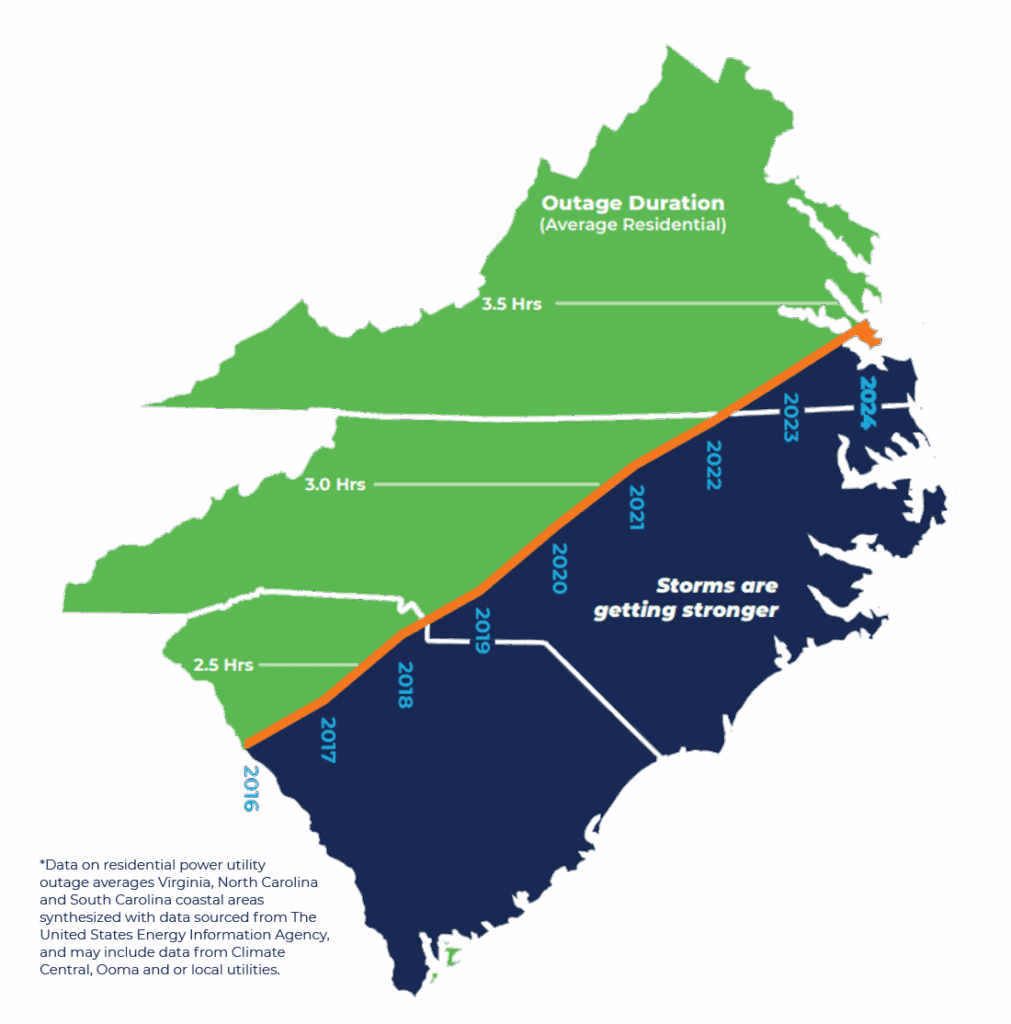
Mid – Atlantic States
- Customers in this region experience on average 7 hours of power loss each year.
- This region is especially susceptible to multi-day outages and is projected to experience up to 400 hours of power loss each year by 2030.
- Weather is the primary cause of power outages , with over 600,000 customers experiencing power loss in Philadelphia in the March 2018 Nor’easter.
- The region experiences just over 2 outages each year.
- The primary risks are an ageing power grid infrastructure and high storm risk, wind, ice, and storms hitting the coastal areas.
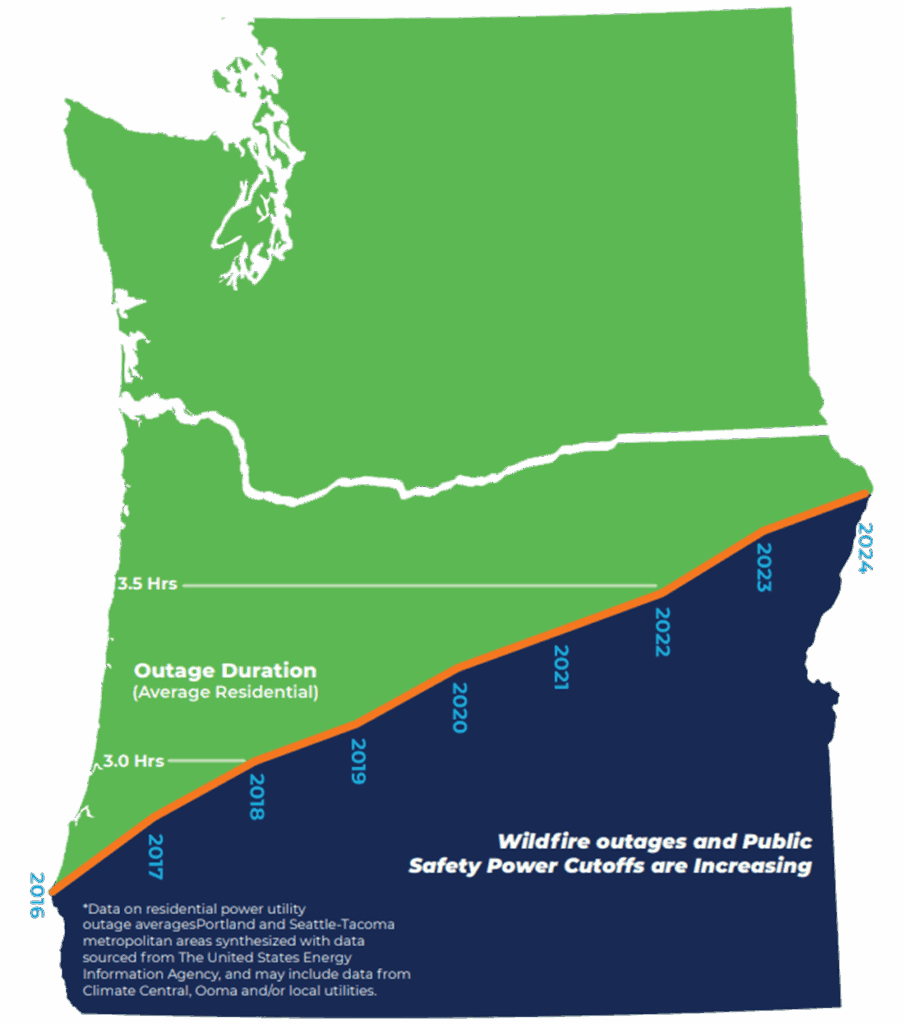
Pacific Northwest
- In the service area of Eugene Water & Electric Board (Oregon), the average outage duration in 2024 was ~65 minutes per customer (SAIDI ≈ 65) and average frequency was ~0.34 outages per customer per year. eweb.org.
- The National Renewable Energy Laboratory (NREL) projects that PNW homeowners will face extended duration power outages and the number of incidents will increase due to weather related incidents.
- The storm surge event in the Puget Sound causes power loss for over 135,000 customers each year.
- The region’s power grid infrastructure has not kept pace with growing demand, and rolling blackouts are expected to double in the next 20 years.
- Weather and the environment combined with an overloaded power grid are the primary causes of power loss in the region, and this is amplified by the rugged terrain in the region.
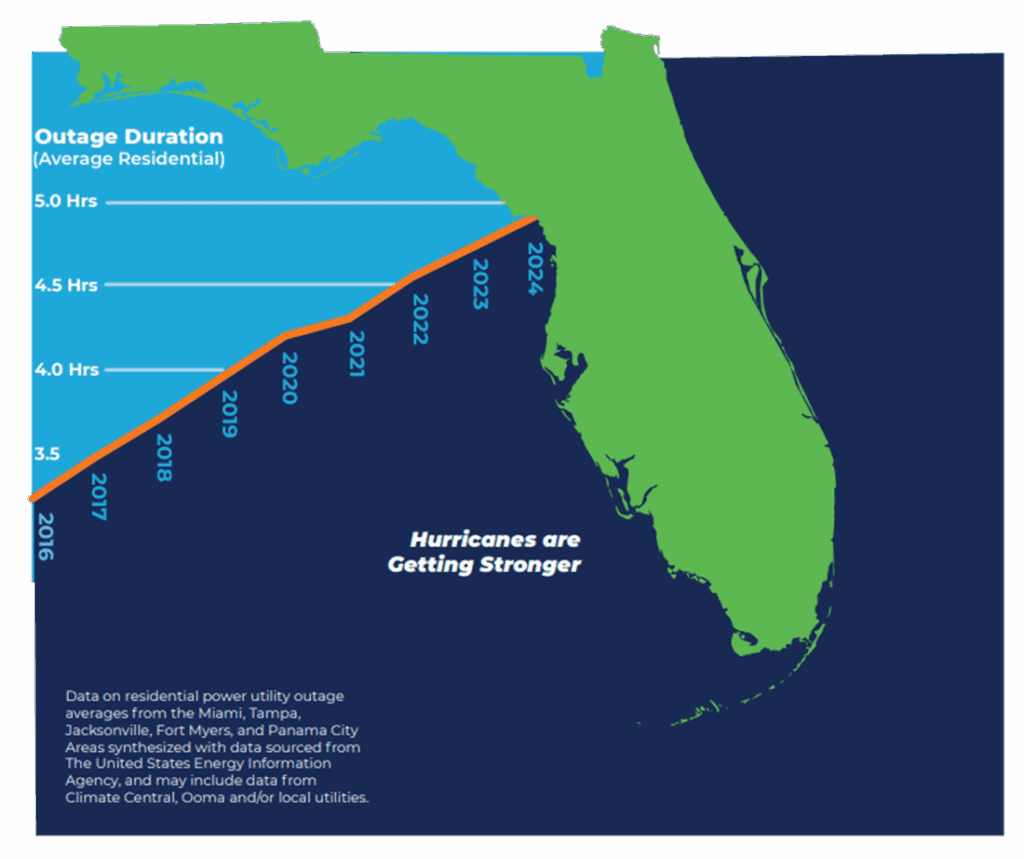
Florida
- Florida is one of the states with above‐average frequency of outages with roughly 2.18 outages per year on average.
- Florida also ranks among the states with longer average annual downtime, showing about 14.6 hours of electrical downtime per customer per year.
- Major storms dramatically increase risk, for example, during Hurricane Irma in 2017, more than 7.7 million homes and businesses in Florida lost power (almost three-quarters of the customers in the state).
- Routine outages cause considerable disruption with one 72-hour study showing a peak of over 13,000 customers without power.
- Studies show the leading cause of electric‐power outages between 2008-2013 was “Weather/Falling Trees”, with hurricanes, thunderstorms and lightning as major drivers.
How Outages Affect Families
Loss of Comfort
Homes become dangerously hot or cold without
heating or cooling.
Food & Medicine Spoilage
Refrigerators and freezers can reach unsafe temperatures in as little as 4 hours.
Health & Safety Risks
Medical equipment, security systems, and well pumps stop working.
Work & School Interrupted
Power loss means no internet, no devices, and no way to stay connected.
Unexpected Expenses
Hotels, eating out, and temporary equipment rentals can add hundreds of dollars per outage.

“Outage times have risen in both Houston and DFW as extreme weather events and grid strain challenge reliability.”
Why This Matters
The average U.S. household now experiences several outages each year.
Longer outages — 8 hours or more — are increasingly common.
With more extreme weather and rising energy demand, disruptions are expected to become more frequent.
Power outages are lasting longer and impacting families in more ways than ever — from food loss to safety concerns to interrupted work and school. As a trusted contractor, you’re in a unique position to help homeowners understand these risks and explore practical solutions. Reliable backup options, including comprehensive service programs available through partners like the Premier Program, can play an important role in helping families feel prepared and protected.